
Phentermine is a stimulant that suppresses appetite by releasing norepinephrine in the brain — approved only for short-term use (up to 12 weeks), costs $15–$30/month generic, and produces 5–9% weight loss. GLP-1 receptor agonists like semaglutide work by mimicking a gut hormone that regulates appetite, insulin, and gastric emptying — approved for long-term use, cost $199–$1,349/month, and produce 10–22% weight loss in clinical trials. The mechanisms are fundamentally different, and that difference explains the results gap.
Phentermine has been on the US market since 1959. That is not a typo. It was approved the same decade the FDA introduced modern drug regulation, under standards that no drug would meet today. The fact that it is still widely prescribed — and still one of the most common weight-loss medications in America — says less about how good it is and more about how long it took medicine to find anything better.
The standard comparison most patients get goes something like this: phentermine is cheap and old, GLP-1 drugs are expensive and new. That framing is not wrong. It is just not nearly enough of an answer. The relevant question is not the price or the patent date. It is the mechanism — because the mechanism determines what the drug actually does, how long it can work, what happens when you stop, and what it does to the rest of your body along the way.
Phentermine works like a stimulant. GLP-1 drugs work like a hormone. Those are not variations on the same approach. They are different classes of intervention acting at different points in an entirely different system. Understanding that distinction is what lets you have an honest conversation with your prescriber — rather than accepting the default "let's try phentermine first because it's cheaper."
A lot of people assume the two drugs are roughly interchangeable, just at different price points. They are not. One raises your blood pressure and heart rate and is contraindicated in anyone with cardiovascular disease. The other has demonstrated a 20% reduction in major cardiovascular events in a large randomised trial. That is not saying a whole lot in phentermine's favour, is it?

How Phentermine Works for Weight Loss
Phentermine is a sympathomimetic amine — chemically a close relative of amphetamine. It works by stimulating the release of norepinephrine in the hypothalamus, the region of the brain that governs hunger signals. More norepinephrine in that region suppresses appetite. Less hunger, less food consumed, less weight gained.
That is the whole mechanism. There is nothing metabolically sophisticated happening. There is no engagement with gut hormones, no change to insulin sensitivity, no modulation of how your body processes or stores energy. The drug pushes a stimulant signal into the brain. The brain interprets that as not being hungry. You eat less.
The downstream effects of this mechanism matter. Because phentermine acts like a stimulant, it also raises heart rate and blood pressure — sometimes meaningfully. It is contraindicated in patients with cardiovascular disease, uncontrolled hypertension, hyperthyroidism, a history of drug abuse, or during pregnancy. The FDA label has never approved it for more than 12 weeks of use, which predates any long-term safety trial. Its Schedule IV controlled substance status reflects its amphetamine-like pharmacology.
Approved mechanism: central appetite suppression via norepinephrine release · Short-term only · Schedule IV controlled substanceIn practice, many physicians prescribe phentermine off-label for longer periods, cycling patients on and off. The evidence base for this practice is thin — it reflects clinical pragmatism in a field that, until recently, had very few tools. The drug works for as long as you take it. The moment you stop, appetite returns. The weight typically returns within months.
Phentermine is also available as Qsymia, a combination with topiramate extended-release, which adds a second appetite-suppression mechanism and produced 9–11% weight loss at 56 weeks in registration trials — better than phentermine alone, still well below what GLP-1 drugs achieve.
How GLP-1 Medications Cause Weight Loss
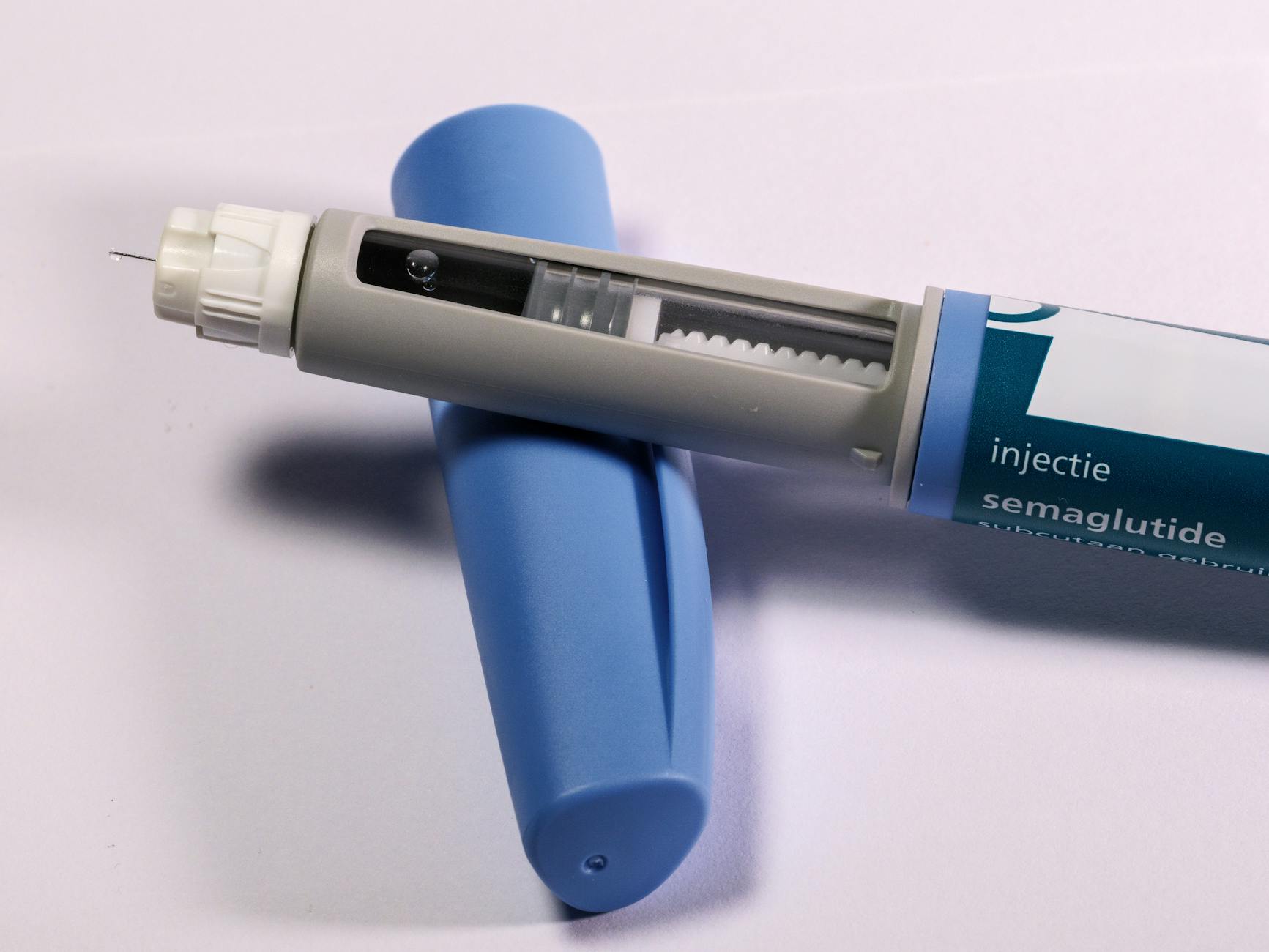
GLP-1 stands for glucagon-like peptide-1. It is a hormone your body produces naturally — primarily in the gut — in response to eating. It signals the brain that food has arrived, tells the pancreas to release insulin, suppresses glucagon, and slows how quickly the stomach empties its contents. The result: you feel full faster, you stay full longer, and you eat less over time.
GLP-1 receptor agonists are synthetic versions of this hormone engineered to last much longer in the body than the natural version, which breaks down within minutes. Semaglutide (Ozempic, Wegovy) has a half-life of approximately one week — which is why it is injected once weekly. Tirzepatide (Mounjaro, Zepbound) adds a second mechanism, also acting on the GIP receptor, which enhances the weight-loss effect further.
The mechanism operating here is fundamentally more systemic than phentermine. It is not just suppressing a hunger signal in the brain. It is re-calibrating multiple points in the appetite and metabolic regulation system simultaneously. That is why the weight loss results are larger, and why the drug has effects on metabolic health beyond just caloric reduction — including improvements in blood glucose, lipids, blood pressure, and, in the SELECT trial, a 20% reduction in major cardiovascular events.
According to Wilding et al. (NEJM, 2021), participants in the STEP 1 trial taking semaglutide 2.4mg once weekly achieved a mean weight reduction of 14.9% at 68 weeks, compared to 2.4% with placebo. No phentermine trial has produced results at that scale over a comparable timeframe — in part because phentermine has never been studied for 68 weeks in a properly powered randomised trial.

Phentermine vs Semaglutide: Weight Loss Results Head to Head
There is no large, direct head-to-head randomised trial comparing phentermine to a GLP-1 drug. That would be the ideal comparison — same population, same duration, randomised allocation. It does not exist. What exists is the best available data from each drug's own trial programme, which is enough to draw clear directional conclusions.
| Drug | Trial / Evidence | Duration | Weight Loss | Long-term approved? |
|---|---|---|---|---|
| Phentermine | Multiple short-term RCTs | Up to 12 weeks | 5–9% body weight | No (Schedule IV, 12-week label) |
| Phentermine/topiramate (Qsymia) | CONQUER trial | 56 weeks | 9–11% body weight | Yes (chronic weight management) |
| Semaglutide 2.4mg (Wegovy) | STEP 1 trial | 68 weeks | 14.9% body weight | Yes (chronic weight management) |
| Tirzepatide 15mg (Zepbound) | SURMOUNT-1 trial | 72 weeks | 20.9% body weight | Yes (chronic weight management) |
The duration asymmetry in this table is important. Phentermine is only studied for 12 weeks — not because it stops working at 12 weeks, but because the FDA label has not authorised longer use and no sponsor has run a modern long-term trial. The comparison is therefore inherently unequal in a way that favours GLP-1 drugs simply because their trials ran longer.
What we can say is this: in the time window where both drugs have been studied, GLP-1 drugs produce larger results. And unlike phentermine, their results come with a cardiovascular benefit signal rather than a cardiovascular risk signal.
For a broader look at what GLP-1 drugs do over time, the GLP-1 weight loss timeline covers the week-by-week progression in more detail.

Side Effects: Where the Two Drugs Diverge Most Sharply
This is where the comparison becomes most clinically consequential — and where the mainstream framing of "cheap old drug vs expensive new drug" breaks down most completely.
Phentermine side effects
Cardiovascular stimulation — Increased heart rate, elevated blood pressure, and palpitations are the most significant concerns. These are direct consequences of phentermine's norepinephrine-releasing mechanism. For patients with pre-existing cardiovascular disease, uncontrolled hypertension, or arrhythmia, phentermine is contraindicated.
Additional common effects include: insomnia (the stimulant action carries through to nighttime), dry mouth, constipation, anxiety, and — less commonly — dependence or tolerance. The potential for psychological dependence explains the Schedule IV classification.
The cardiovascular profile of phentermine was highlighted dramatically in the 1990s when the combination product fen-phen (fenfluramine plus phentermine) was withdrawn after fenfluramine was found to cause cardiac valvulopathy. Phentermine itself was not implicated in the valvulopathy, but the episode underscored how cautiously cardiovascular outcomes must be monitored in this drug class.
GLP-1 receptor agonist side effects
Gastrointestinal — The dominant side effect profile of GLP-1 drugs is gastrointestinal: nausea, vomiting, diarrhoea, and constipation, particularly during dose escalation. These effects typically diminish as patients titrate up to their maintenance dose over 16–20 weeks. In the STEP 1 trial, nausea was reported by approximately 44% of participants on semaglutide — significant, but manageable in the majority of cases with a structured titration protocol.
Heart rate — GLP-1 drugs mildly increase resting heart rate by approximately 2–4 beats per minute on average. This is modest and appears mechanistically distinct from phentermine's sympathomimetic action — it does not appear to translate into adverse cardiovascular outcomes at the population level, given the cardiovascular benefit data from SELECT and LEADER.
Rare but serious — Pancreatitis risk remains a labelled warning for GLP-1 drugs, though the causal relationship has been debated in the literature. Thyroid C-cell tumours were observed in rodent studies; the clinical significance in humans is uncertain. Patients with a personal or family history of medullary thyroid carcinoma or MEN2 syndrome should not use GLP-1 drugs.
According to the SELECT trial investigators (NEJM, 2023), semaglutide 2.4mg reduced the rate of major cardiovascular events by 20% compared to placebo in patients with obesity and established cardiovascular disease. No drug that raises heart rate and blood pressure — which phentermine does — could produce that result.

Phentermine vs GLP-1: Which Is Right for You
The question I always hear in this comparison is: "Can I just start with phentermine because it's cheaper, and switch to a GLP-1 later if I need to?" The answer is: sometimes, but this framing misunderstands what both drugs are doing.
Phentermine is not a milder version of a GLP-1 drug. They are not on the same escalating ladder. They are different mechanisms, with different risk profiles, appropriate for different patients. The decision depends on your clinical picture, not primarily your budget.
Phentermine may be appropriate if:
- You have no cardiovascular contraindications (normal blood pressure, no history of heart disease, no arrhythmia)
- You need a short-term appetite reduction bridge — for example, while awaiting GLP-1 insurance approval
- Cost is a genuine barrier and you are not a candidate for manufacturer assistance programs
- You have used it before without adverse effects and your prescriber is comfortable with intermittent prescribing
- You understand the weight is likely to return when you stop, and have a plan for that
GLP-1 drug is preferable if:
- You have cardiovascular disease or high cardiovascular risk — in which case, phentermine is contraindicated and Wegovy has demonstrated benefit
- You have type 2 diabetes or pre-diabetes — GLP-1 drugs address both conditions simultaneously
- You need long-term weight management — GLP-1 drugs are approved for chronic use, phentermine is not
- You have a BMI of 35+ and want the largest evidence-based effect size available
- You qualify for manufacturer assistance programs (which can bring cost to $25/month) or have insurance coverage
For patients who genuinely cannot access GLP-1 drugs at a manageable cost after exploring all available routes — including the options covered in the cheapest ways to get GLP-1 in 2026 — phentermine is a real clinical tool with real evidence. It is not worthless. It just does considerably less than its successors, carries more cardiovascular risk, and is not designed as a long-term answer.
The WiseGoodness Health Techs pillar covers the full landscape of weight management tools and technologies if you are evaluating all available options for your situation.

What Both Drugs Miss — and Why It Matters
Here is the part of the comparison that most articles skip. Both phentermine and GLP-1 drugs produce weight regain after discontinuation. The STEP 4 trial showed that patients who stopped semaglutide after 20 weeks regained approximately two-thirds of their lost weight within 12 months. Phentermine produces similar patterns on a shorter timescale.
This is not a drug failure. It is what happens when you remove a pharmacological signal from a system that was functioning differently before you applied it. The lake does not clean itself just because you stopped adding the vitamins. The underlying metabolic drivers — insulin resistance, disrupted hunger hormones, years of dietary pattern — do not disappear because the drug reduced appetite for a while.
The implication is straightforward: neither drug is a standalone solution for most patients. Both work best as part of a broader programme that includes the metabolic and lifestyle foundations that affect long-term outcomes. For patients curious about where natural alternatives like berberine fit into that picture, our GLP-1 vs berberine comparison tool is a useful starting point before the prescriber conversation. For patients on GLP-1 drugs specifically, deliberate attention to protein intake and micronutrient sufficiency becomes more important as appetite suppression reduces overall food volume — a topic covered in more depth in the best supplements to take on GLP-1 guide.
Understanding the foundations of metabolic health gives context for why these drugs work when they do, and why the results are so variable between patients who seem to be on identical protocols.
Frequently Asked Questions
GLP-1 drugs produce substantially greater weight loss on average — semaglutide 2.4mg resulted in 14.9% body weight reduction at 68 weeks in the STEP 1 trial, compared to 5–9% typically seen with phentermine in short-term studies. However, phentermine is approved only for short-term use (up to 12 weeks), costs $15–$30/month generic, and may suit patients who need a bridge while awaiting GLP-1 access or coverage. For sustained, clinically meaningful weight loss, the evidence favours GLP-1 drugs significantly.
There is no absolute pharmacological contraindication to combining phentermine with a GLP-1 receptor agonist, and some obesity medicine specialists do use this combination. However, this is off-label use without large randomised trial support. The combination increases cardiovascular stimulation risk from phentermine alongside any GLP-1-related heart rate effects. It requires close clinical supervision and is not a routine recommendation for most patients.
Phentermine received FDA approval in 1959, before modern long-term safety trial requirements existed. Its short-term approval label reflects the data available at approval time, not a definitive finding that long-term use is harmful. In practice, many physicians prescribe it off-label for longer periods. The cardiovascular stimulation mechanism — increased heart rate and blood pressure — is the primary concern with extended use, and without a modern long-term safety trial, the risk cannot be fully characterised.
Most patients regain the weight lost on phentermine within 6 to 12 months of stopping. Phentermine does not address the underlying metabolic or hormonal drivers of obesity — it suppresses appetite via stimulant action, and when that suppression is removed, appetite returns to pre-treatment levels. The same weight regain pattern occurs with GLP-1 drugs after discontinuation, as shown in the STEP 4 trial, which makes long-term planning important for both.
Yes. Phentermine is a Schedule IV controlled substance in the United States, meaning it has recognised medical use but also potential for dependence. It is chemically related to amphetamine, which is Schedule II. The Schedule IV classification reflects lower dependence potential than classical amphetamines, but it still requires a DEA-registered prescriber and cannot be refilled without a new prescription in most states.
GLP-1 receptor agonists have demonstrated cardiovascular benefit in patients with established cardiovascular risk. The SELECT trial showed Wegovy reduced major cardiovascular events by 20% in people with obesity and established cardiovascular disease. The LEADER and SUSTAIN-6 trials showed similar benefits for liraglutide and semaglutide in type 2 diabetes. This cardiovascular benefit profile is the opposite of phentermine, which raises both heart rate and blood pressure.
Qsymia is an FDA-approved combination of phentermine and topiramate extended-release, approved for chronic weight management. It produced 9–11% weight loss at 56 weeks in registration trials — better than phentermine alone, but still well below semaglutide or tirzepatide results. It is cheaper than GLP-1 drugs but carries phentermine's cardiovascular stimulation concerns, making it unsuitable for patients with cardiovascular contraindications.