Oura Ring Gen3 ($299–$499 + $5.99/month) and Apple Watch SE ($249, no subscription) are built for different health goals. Oura Ring excels at passive monitoring — sleep stages, HRV, daily readiness, and temperature-based cycle tracking — with 5–7 days of battery. Apple Watch SE adds built-in GPS, real-time workout metrics, notifications, and crash detection. Over 24 months, Oura with membership costs $442+ vs Apple Watch SE at $249. Neither replaces the other — they were designed for entirely different uses.
The average person who buys an Oura Ring already owns a smartwatch. That is not a coincidence — and it completely changes what this comparison is actually about.
Most "oura ring vs apple watch" articles treat this as a form factor debate: ring vs watch, discreet vs visible, 7-day battery vs nightly charging. That framing is accurate but useless. These two devices were built around fundamentally different theories of what health data should do for you. Getting that distinction right is the difference between spending your money on something that changes your health and spending it on something you forget is on your finger.
Oura Ring Gen3 operates on the assumption that the most important health data is passive — what happened while you slept, what your heart rate variability says about your body's recovery, whether your temperature curve suggests your cycle is about to shift. It does not interrupt your day. It reports on it. Apple Watch SE operates on the assumption that health data is most useful when it is real-time and actionable — your GPS split during a run, a notification that your heart rate spiked during a meeting, a crash detection alert when something goes wrong.
One device tells you to close your rings. The other tells you whether your body is in a condition to close them well. This comparison covers sensors, sleep tracking, women's health, activity logging, battery life, and the honest 24-month cost of each device — so you can make that distinction cleanly before you buy.

What Oura Ring and Apple Watch Are Actually Built For
These two devices have been in the same "health wearable" category for years, which has created the impression they are competing for the same user. They are not.
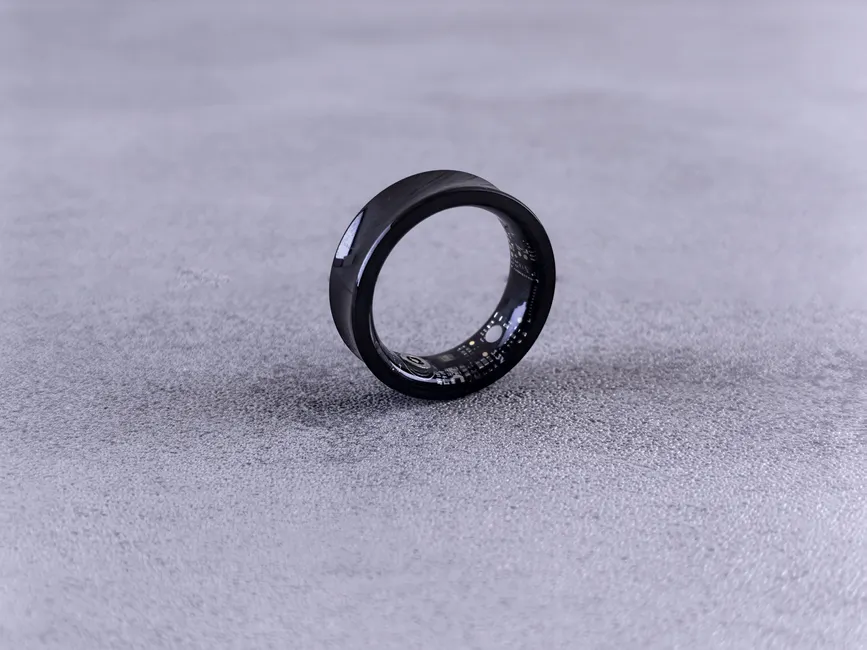
Oura Ring is a passive health data collection device. No screen. No way to check the time. No notifications. Six sensors measuring photoplethysmography (optical heart rate), skin temperature, accelerometry, and SpO2 — continuously, 24 hours per day. The output is a trio of daily scores — Sleep, Readiness, and Activity — generated each morning after the ring has processed eight hours of physiological data. You wear it. It works. You check the app in the morning to find out what it learned while you were asleep.
Apple Watch SE is a smartwatch with health features. It tells the time, delivers notifications, tracks your workout with GPS, runs apps, supports Apple Pay, and — yes — monitors your heart rate, sleep stages, and blood oxygen. The health data is real and useful. But the device was designed primarily as a reactive, real-time tool. You interact with it throughout the day. It alerts you. You check it during a run. It is present.
The practical consequence: wearing an Oura Ring means making peace with the absence of a screen on your finger. Wearing an Apple Watch means accepting that meaningful sleep tracking requires charging discipline most people do not maintain. Neither device is objectively better. They are optimised for different relationships with health data.
| Feature | Oura Ring Gen3 | Apple Watch SE (2nd Gen) |
|---|---|---|
| Form Factor | Ring (finger-worn) | Smartwatch (wrist-worn) |
| Display | None | Retina LTPO display |
| GPS | None (uses phone GPS) | Built-in GPS + GLONASS |
| Heart Rate | Continuous 24/7 | Continuous 24/7 |
| HRV | Nightly full measurement | Spot check only |
| Temperature Sensor | Yes — skin temp deviation | No (SE model) |
| Sleep Tracking | Stages + Readiness Score | Stages + duration |
| Cycle Tracking | Temperature-based (Cycle Insights) | Logged data (Cycle Tracking app) |
| ECG | No | No (SE model) |
| Crash Detection | No | Yes |
| Notifications | No | Full smartphone notifications |
| Battery Life | 5–7 days | ~18 hours |
| Water Resistance | 100m | 50m |
| Subscription | $5.99/month required | None |
| Price | $299–$499 | $249 |
| Shop on Amazon |
Oura Ring Gen3 ★ 4.2 · 3,000+ reviews | Apple Watch SE (2nd Gen) ★ 4.6 · 52,000+ reviews |

Sensors, Accuracy, and What They Actually Measure
Both devices use optical photoplethysmography — green light through the skin, measuring blood volume changes — for continuous heart rate monitoring. Both track blood oxygen (SpO2) and respiratory rate. The sensor hardware is comparable. The location is not.
The finger has thinner skin and sits closer to major blood vessels than the wrist. This matters for HRV measurement in particular — heart rate variability is measured in milliseconds, and the signal-to-noise ratio on a finger-worn sensor is meaningfully cleaner than on a wrist sensor affected by arm movement and body position during sleep.
Oura Ring's most distinct sensor advantage is skin temperature. The ring measures temperature deviation from your personal baseline nightly — detecting changes as small as 0.13°C. This feeds into illness detection (elevated temperature precedes symptoms), cycle tracking (the post-ovulation temperature rise is 0.2–0.5°C above baseline), and recovery monitoring. Apple Watch SE has no temperature sensor — that feature is exclusive to the Apple Watch Series 9 and Ultra 2.
For HRV specifically: Oura measures HRV continuously throughout the night and generates a nightly average. Apple Watch measures HRV in short background readings throughout the day — not a sustained nightly measurement. According to a 2020 review in Frontiers in Physiology (Shaffer & Ginsberg), HRV measured during sleep is significantly more reliable than spot measurements taken during the day, because it is free from the confounding effects of movement, stress, and circadian fluctuation.

Sleep Tracking and Recovery — Where Oura Wins
Sleep tracking is the clearest category difference between these two devices. Not because Apple Watch tracks sleep poorly — it does not. But because most Apple Watch users never track sleep at all.
Apple Watch SE lasts approximately 18 hours on a charge. The standard advice: charge it for 30 minutes while you shower in the morning, and again while you prepare for bed at night. That works. Until the night you fall asleep on the sofa, or forget to charge, or the 30-minute window compresses — and you wear your watch to bed with 12% battery and wake up to a dead device and no sleep data. That scenario, for most users, arrives within the first month. After that, overnight tracking becomes inconsistent.
Oura Ring lasts 5–7 days. You charge it for 20–30 minutes every few days. Sleep tracking is uninterrupted, every night, automatically, without you thinking about it. According to CDC sleep health data, 1 in 3 American adults gets insufficient sleep regularly — but you cannot address what you cannot consistently measure.
When Oura does track sleep, it provides: light sleep duration, deep sleep duration, REM sleep duration, awake time, sleep efficiency, resting heart rate, HRV, respiratory rate, skin temperature deviation, and a composite Readiness Score that weights all of these factors against your personal baseline. The morning app experience gives you a single number (Readiness: 78/100, for example) and tells you specifically what drove it — "your resting heart rate was elevated by 4 BPM, likely from yesterday's training load."
Apple Watch provides sleep stage duration and total sleep time in the Health app. It does not generate a readiness score or connect sleep quality to next-day training decisions. For sleep awareness: Oura Ring Gen3. For people who will consistently charge their Apple Watch before bed: Apple Watch SE is adequate.

Oura Ring vs Apple Watch for Women's Health
This is a category where Oura Ring has a genuine, physiologically grounded advantage — and it matters for a significant portion of the people making this purchase decision.
Basal body temperature rises by 0.2–0.5°C above your personal baseline in the days following ovulation. This temperature shift is one of the most reliable physiological signals of the luteal phase of the menstrual cycle. Detecting it requires a sensor accurate enough to measure temperature changes at that resolution — and positioned somewhere the reading is not compromised by environmental temperature (like the ambient air around your wrist).
Oura Ring measures skin temperature from the inner surface of the ring, in contact with the finger tissue throughout the night. The algorithm compares each night's reading against your own 30-day baseline and flags deviations. Its Cycle Insights feature uses this temperature data — combined with HRV patterns and resting heart rate changes — to predict ovulation windows and cycle phases. It integrates with Natural Cycles, the FDA-cleared digital contraception app. For women tracking fertility awareness, this is a meaningfully different level of data than step counts and logged periods.
Apple Watch SE has no temperature sensor. The Apple Watch Cycle Tracking app in the Health ecosystem allows you to log period start/end, symptoms, and flow — and estimates future cycles based on that logged history. It does not have a biometric basis for those estimates. Apple Watch Series 9 added a skin temperature sensor, but it is less validated for cycle prediction purposes than Oura's purpose-built implementation.
For women navigating perimenopause, temperature dysregulation during that transition is also trackable via Oura's nightly temperature data — detecting the deviations that correlate with hot flashes and sleep disruption before they fully present as symptoms. If women's health monitoring is a priority, this is a compelling differentiator. Our Women's Health resources cover how wearable data connects to hormonal health across different life stages.

Activity Tracking, GPS, and Sport Modes
Apple Watch wins this category. It is not a close comparison.
Apple Watch SE has built-in GPS and GLONASS. It tracks real-time pace, distance, route, elevation, and splits. It supports over 80 workout types with sport-specific metrics — swim lap counting, cycling cadence, tennis swing detection. It connects to gym equipment for live calorie tracking. It closes Activity Rings that visually represent your daily movement, stand, and exercise goals in a format that research has shown to drive behaviour change through gamification.
Oura Ring auto-detects workouts (running, cycling, walking) and logs heart rate zones and calorie estimates during them. It does not have GPS — so for route distance and pace, it relies on your phone's GPS via Bluetooth. Take your phone on every run and the workout data is reasonably complete. Leave your phone at home and you get heart rate data with no distance. For trail runners, open-water swimmers, and cyclists who want their wrist to replace their phone during training: Oura cannot do that job.
The question I always hear is: "Can't I just use Oura Ring for daily tracking and bring my phone for GPS?" Yes, absolutely — and many people do exactly that. But if you are paying $299+ for a health device, knowing that it requires a separate GPS source for workout tracking is a real constraint, not a minor footnote.
The activity data that Oura does well: tracking daily movement versus your personal average, flagging whether your Activity Score is on track, and connecting activity to recovery — "yesterday's training load is why your Readiness is lower today." That feedback loop is genuinely useful for people who train systematically. It is just not useful for routing your Saturday morning run. For GPS sport tracking: Apple Watch SE. For connecting training to recovery: Oura Ring Gen3.

Battery Life, Price, and the Subscription Reality
The headline prices: Oura Ring Gen3 starts at $299 (Heritage Silver) and goes up to $499 (Stealth titanium finish). Apple Watch SE starts at $249 (40mm) and $279 (44mm). Oura looks more expensive. But the full cost picture is different.
24-month total cost of ownership
Oura Ring Gen3 Heritage Silver + monthly membership: $299 + ($5.99 × 24) = $442.76
Oura Ring Gen3 Heritage Silver + annual membership: $299 + ($69.99 × 2) = $438.98
Apple Watch SE 40mm (no subscription): $249 flat. No recurring charges.
Apple Watch SE 40mm + AppleCare+ (optional): $249 + $79 = $328 for 2 years of coverage.
The membership is not optional. Without it, Oura Ring Gen3 shows you step counts and heart rate — the same data your phone already collects for free. Sleep stages, Readiness Score, HRV trends, and Cycle Insights all require the $5.99/month plan. This is not a hidden fee — Oura discloses it clearly — but many comparison articles omit it from the cost calculation.
Battery life deserves more than a bullet point. Oura Ring lasts 5–7 days and charges fully in approximately 20–80 minutes (depending on depletion level). The charge cable uses a magnetic dock that fits the ring perfectly. Apple Watch SE lasts approximately 18 hours — sufficient for a full day and overnight, if you build a disciplined charging routine. Apple's Low Power Mode extends this to 36 hours, at the cost of disabling most health features including continuous heart rate monitoring.
Both are water-resistant. Oura Ring is rated 100m. Apple Watch SE is rated 50m. Both handle swimming, showering, and rain without issue. For open-water diving, Oura actually has the advantage — though neither device is designed for pressure diving.
Garmin's approach is worth noting in context: the Garmin Forerunner 255 at ~$350 has no subscription, 14-day battery, and full GPS — competing directly on value against both these devices for athletes who prioritise sport performance over health monitoring philosophy.

The Verdict: Which One Is Right for You
Buy Oura Ring Gen3 if:
Sleep quality, HRV recovery, and readiness monitoring are your primary health goals. You want temperature-based cycle tracking that goes beyond logged period data. You train systematically and want to understand how your training affects your next-day recovery, not just your next-mile pace. You are comfortable with no screen, no GPS, and no notifications — and you find the absence of those things appealing rather than alarming. You can find the Oura Ring Gen3 on Amazon in Silver, Gold, Black, and Stealth finishes — order a sizing kit first, as it matters.
Buy Apple Watch SE if:
You want a smartwatch that also tracks your health — not the other way around. GPS workout tracking, notifications, Apple Pay, and crash detection are features you will actually use. You use an iPhone and want your wrist to be an extension of it. You will build a consistent charging routine, or accept that sleep tracking will be intermittent. You can find Apple Watch SE 2nd Gen on Amazon in midnight, silver, and starlight finishes at $249.
Can you use both?
Yes — and many serious health-focused people do. The common setup: Oura Ring worn 24/7 for passive health monitoring, Apple Watch worn during workouts and when GPS or notifications are needed. This avoids the charging conflict (Apple Watch charges while you work out in the morning, Oura charges for 20 minutes while you shower). The health technology landscape is broad enough that no single device is the right tool for every job. For a personalised recommendation across five leading devices, try our health wearable tools on the WiseGoodness platform.
Here is the thing about buying a device because you intend to change your behaviour: the device does not create the intention. The person who will actually engage with their Readiness Score every morning already has a relationship with their health data — the Oura Ring deepens it. The person who wants GPS routes and calendar reminders on their wrist already knows what they want from an Apple Watch. Start with which device describes your actual daily life, not which one describes the version of yourself you plan to become. For a broader view of how passive monitoring fits long-term health outcomes, the WiseGoodness platform covers the full evidence base.

Frequently Asked Questions
Independent research suggests Oura Ring is among the most accurate consumer wearables for sleep staging. A validation study comparing Oura against polysomnography found approximately 79% accuracy for sleep stage classification — higher than wrist-based devices in comparable studies. Apple Watch sleep tracking has improved with watchOS 10 but remains limited by wrist-sensor placement and the practical problem that most users charge it overnight and get no sleep data at all.
No — they are not substitutes. Oura Ring has no display, no GPS, no notifications, and no real-time workout metrics. It cannot show directions, respond to messages, or tell the time without a phone. Apple Watch SE does all of those things. Oura Ring replaces the health monitoring function of a smartwatch — not the smartwatch itself. Most people who own both use the Oura Ring 24/7 and wear Apple Watch only for workouts and notifications.
Oura Ring Gen3 requires a membership at $5.99/month or $69.99/year to access most features — sleep stages, readiness score, HRV trends, and cycle tracking. Without a membership, you can view basic step counts and session heart rate but lose the core features that justify the ring's price. Over 24 months, the membership adds approximately $143 (monthly) or $140 (annual billing) to the ring's purchase price.
Oura Ring is one of the strongest wearables for women's health because its temperature sensor detects the basal body temperature rise that occurs around ovulation — a biometric signal wrist-worn devices cannot measure as reliably. Oura's Cycle Insights feature uses temperature data plus HRV patterns to predict cycle phases and integrates with Natural Cycles (FDA-cleared). Apple Watch Cycle Tracking relies on user-logged data rather than physiological temperature signals.
Oura Ring tracks heart rate during workouts and logs sessions in the app, but has no built-in GPS — so it cannot map routes or measure precise distance without your phone's GPS. Apple Watch SE has built-in GPS and provides live pace, route mapping, and sport-specific metrics across 80+ workout types. For running and cycling where GPS accuracy matters, Apple Watch SE is the better tool. Oura's workout data is adequate for heart rate zones and calorie estimates.
Oura Ring is substantially better for sleep tracking for two reasons: its 5–7 day battery means sleep tracking is uninterrupted every night without the charging discipline Apple Watch requires, and its data depth is greater — sleep stages, composite Readiness Score, HRV, respiratory rate, and temperature deviation. Apple Watch provides sleep stage duration and total time but no readiness metric. For consistent, data-rich sleep monitoring, Oura Ring Gen3 is the clearer choice.
Oura Ring is worth the price if recovery monitoring, sleep quality, and body temperature tracking are your primary goals — and you will engage with the data daily. Over 24 months, the ring plus membership costs $442+. Apple Watch SE at $249 with no subscription is better value if you want GPS workouts, notifications, and Apple ecosystem integration. The Oura Ring earns its price for people who will use it as a health platform; it does not earn it for people who want a stylish fitness tracker.